
Raptor Migration
Roger Tory Peterson said it best: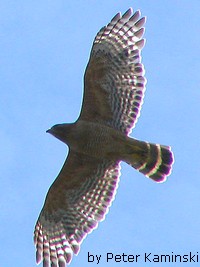
"On any clear cold weekend in October, tens of thousands of men, women and youngsters gaze skyward from the rocky ridges across the land, and from strategic spots along the coast and the Great Lakes. All stare fixedly at black spots in the blue sky; many use expensive binoculars. They are not plane spotters; they are hawk watchers, devotees of an increasingly popular facet of the sport of birding..." (Roger Tory Peterson, Editors note, A Field Guide to Hawks, William S. Clark & Brian K. Wheeler).
Roger Tory Peterson published the his first field guide in 1934, the same year Hawk Mountain Sanctuary was created. At the time, RTP only knew of three good places to watch raptor migration: Hawk Mountain, PA, Cape May, NJ & Point Pelee, Ontario. Now there are 100s of "Hawk Watch" sites around the world visited daily by 1000s of people during the peak raptor migration periods.
Raptor Migration and Hawk Watching Sites
Many migration sites have official counters that document the numbers of each species that are seen. These data are being used to monitor raptor populations world-wide.
Roger Tory Peterson should have included September because the peak numbers of raptors can be seen at many sites around September 21 (First Day of Autumn). Depending upon the species and location, Autumn/Fall migration starts in August and can last into December.
Raptor Migration Sites
There is also a Spring Migration of raptors as they return from Wintering areas to their breeding areas. The Spring Migration is shorter duration, with most birds being seen during March, April and May.
We have compiled a list of sites where raptor migration can be observed. The list includes many of the key migration spots throughout the U.S., Canada and Mexico. We've also added sites we know of personally. This is a good place for beginners to start to find local hawk watch sites.
The links below are not active, simply copy the links and paste into your browser.
- Alabama - Fort Morgan/Gulf Shores - Gulf/Caribbean Flyway - Best time to see migration is in the Fall - A historic site in 1970s for Peregrines, but no current information or contacts.
- Alaska - Gunsite Mountain - Pacific Flyway - Spring Migration Site - A Map, site information, directions and history are available here:
https://hawkcount.org/siteinfo.php?rsite=549
A good site for Harlan's Hawks. - Alberta - South Livingstone - Western Flyway - Both Spring and Fall Migration, but Fall is best - Directions, contact information, history and count
data available from the Rocky Mountain Eagle Research Foundation here:
http://www.eaglewatch.ca
Thousands of Golden Eagles seen here. - Arizona - Grand Canyon (Yaki Point)- Western Flyway - A Map, site and contact information, directions and history are available here:
https://hawkcount.org/siteinfo.php?rsite=578. - California - Golden Gate - Pacific Flyway - Best time to see migration is in the Fall - A map, site and contact information, directions and history
are available here:
http://www.parksconservancy.org/programs/ggro/ - Colorado - Dinosaur Ridge, Morrison - Western Flyway - Spring Migration Site - Bird conservancy or the Rockies - Contact information available here:
http://www.birdconservancy.org/get-involved/volunteer/citizen-science/ (see hawkwatch section) - Connecticut - Lighthouse Point Park, New Haven - Eastern Flyway - Best time to see migration is in the Fall - Northeast Hawk Watch - Directions and
contact information about this site and others in the regeion are available here:
http://www.battaly.com/nehw/ - Delaware - Cape Henlopen - Eastern Flyway - Best time to see migration is in the Fall- A Map, site information, directions and history are available
here:
https://hawkcount.org/siteinfo.php?rsite=169
a good site to see Osprey. - Florida - Florida Keys Hawkwatch, Curry Hammock State Park - Best time to see migration is in the Fall - Site and contact information available here:
https://floridakeyshawkwatch.wordpress.com/
great place to see migrationg Peregrine Falcons see video below.
Hawkwatch Video of Florida Keys Hawkwatch at Curry Hammock State Park
Watch as counters see 1,506 Peregrine Falcons on one day (Oct. 25,2015).
- Georgia - Little information except for some migration noted near Atlanta. The Coast must also have raptor migration in the Fall.
- Hawaii - No regular Raptor Migration.
- Idaho - Lucky Peak/Boise Ridge - Western Flyway - Best time to see migration is in the Fall - Idaho Bird Observatory/Boise State University -
Site and contact information available here:
https://ibo.boisestate.edu/visit/ - Illinois - Illinois Beach State Park, Zion - Central Flyway - Best time to see migration is in the Fall - Map, site and contact information,
directions and history are available here:
https://hawkcount.org/siteinfo.php?rsite=527 - Indiana - Indiana Dunes - Central Flyway - used to be a Hawk Watch Site, but no new info - Old info here:
https://hawkcount.org/siteinfo.php?rsite=174 - Iowa - Hitchcock Nature Center, Honey Creek - Central Flyway - Best time to see migration is in the Fall - Map, site and contact information,
directions and history are available here:
https://hawkcount.org/siteinfo.php?rsite=172
averages 13,000 raptors each Fall. - Kentucky - Little information except for some migration noted at Pine Mountain in the Bad Branch State Nature Preserve and in the Cumberland Mountains (Cumberland Gap National Historic Park) - Central Flyway - Best time to see migration is in the Fall.
- Nevada - Goshutes Mountains - Western Flyway - Best time to see migration is in the Fall - Hawk Watch International - More information available
here:
http://www.hawkwatch.org/migration/item/78-goshute-mountains-hawkwatch
Hawkwatch Video at the Goshute Mountain site in Nevada
This video by Hawk Watch International explains why they collect raptor migration data.
- Maine - Cadillac Mt., Acadia N.P., Bar Harbor - Eastern Flyway - Best time to see migration is in the Fall - National Park Service - Map, site
and contact information is available here:
https://hawkcount.org/siteinfo.php?rsite=280 - Manitoba - St. Adolphe Hawkwatch - Central Flyway - Spring Migration Site - Manitoba Naturalists Society - http://www.naturemanitoba.ca/outdoor-activities/996
- more information here:
https://hawkcount.org/siteinfo.php?rsite=643 - Maryland - Turkey Point (Elk Neck State Park) & Washington National Monument State Park, Boonsboro - Eastern Flyway - Best time to see migration is
in the Fall - Map, site and contact information, directions and history are available here:
https://hawkcount.org/siteinfo.php?rsite=278
and https://hawkcount.org/siteinfo.php?rsite=279 - Massachusetts - There are many raptor migration sites in Mass., including Barre Falls Dam (Spring); Mount Wachusett, Princeton (Fall); Mount
Watatic, Ashburnham (Spring and Fall)and Pilgrim Heights, North Truro (Spring) - Eastern Flyway - Map, site and contact information, directions and
history are available here:
https://hawkcount.org/siteinfo.php?rsite=181
and https://hawkcount.org/siteinfo.php?rsite=228
and https://hawkcount.org/siteinfo.php?rsite=229
and https://hawkcount.org/siteinfo.php?rsite=113 - Michigan - Detroit River Hawk Watch, Brownstown - Central Flyway - Best time to see migration is in the Fall - Map, site
and contact information is available here:
https://hawkcount.org/siteinfo.php?rsite=285 - Montana - Bridger Mountain - Western Flyway - Best time to see migration is in the Fall - Hawk Watch International - More information available
here:
http://hawkwatch.org/migration/item/77-bridger-mountains-hawkwatch - New Hampshire - Little Round Top near Bristol & Pack Monadnock Raptor Migration Observatory near Peterborough - Eastern Flyway -
Best time to see migration is in the Fall - More information available here:
https://hawkcount.org/siteinfo.php?rsite=317
and https://hawkcount.org/siteinfo.php?rsite=320 - New Jersey - Cape May Point (Fall) and Sandy Hook (Spring) are two very well known raptor migration sites - Eastern Flyway -
N.J. Audubon Society - More information available here:
https://hawkcount.org/siteinfo.php?rsite=328
and https://hawkcount.org/siteinfo.php?rsite=340 - New Mexico - Manzano Mountains - Western Flyway - Best time to see migration is in the Fall - Hawk Watch International - More information available
here:
http://hawkwatch.org/migration/item/79-manzano-mountains-hawkwatch
Hawkwatch Video at the Manzano Mountain site in New Mexico
This video by the New Mexico Game and Fish explains how raptor migration data is collected and used.
- New York - Braddock Bay Park, Hilton - Eastern Flyway - Spring Migration Site - Braddock Bay Raptor Research - Map, site and contact information,
directions and history are available here:
https://hawkcount.org/siteinfo.php?rsite=353 - North Carolina - There are several sites in N.C. - Mahogany Rock, Sparta; Pilot Mountain State Park; Hanging Rock State Park and on the Outer
Banks at Pea Island National Wildlife Refuge - Eastern Flyway - Best time to see migration is in the Fall - The mountain sites are best know for Broad-
winged Hawk Migration and Coastal Sites for falcons; Peregrines, Merlins and American Kestrels - Map, site and contact information, directions and history
are available here:
https://hawkcount.org/siteinfo.php?rsite=300
and https://hawkcount.org/siteinfo.php?rsite=306
and https://hawkcount.org/siteinfo.php?rsite=761
and https://hawkcount.org/siteinfo.php?rsite=305 - Ohio - There are no major concentration points for raptor migration in Ohio, but look for Broad-winged Hawks in September - Some history of hawk watching at Crane Creek State Park, Magee Marsh Wildlife Area, Ottawa N.W.R
- Ontario - Hawk Cliff Hawkwatch, Port Stanley and High Park, Toronto - Central Flyway - Best time to see migration is in the Fall -
Hawkcliff Foundation - More information here:
https://hawkcount.org/siteinfo.php?rsite=392
and https://hawkcount.org/siteinfo.php?rsite=393 - Oregon - Bonney Butte - Pacific Flyway - Best time to see migration is in the Fall - Hawk Watch International - More information available
here:
http://hawkwatch.org/migration/item/81-bonney-butte-hawkwatch - Pennsylvania - There are many hawk watching sites in Pa. - Hawk Mountain Sanctuary near Kempton and Waggoner's Gap are world famous
hawk watch sites - Eastern Flyway - Best time to see migration is in the Fall - Hawk Mountain Sanctuary Association & Waggoner's Gap Land owned by
Pa. Audubon Society to preserve the Hawk Watch - Map, site and contact information, directions and history are available here:
https://hawkcount.org/siteinfo.php?rsite=109
and https://hawkcount.org/siteinfo.php?rsite=439 - Quebec - Observatoire d'oiseaux de Tadoussac, Tadoussac - Central Flyway - Fall Migration Site - Explos-Nature - Map, site and contact
information, directions and history are available here:
https://hawkcount.org/siteinfo.php?rsite=572 - South Carolina - Caesars Head State Park - Eastern Flyway - Fall Migration Site - Map, site and contact information, directions and history
are available here:
https://hawkcount.org/siteinfo.php?rsite=551 - Texas - There may be few hawk watching sites in Texas, but they numbers are huge. - Hawk Watch International - Corpus Christi (Spring) &
Bentsen Rio Grande Valley State Park (Spring & Fall) - Gulf/Caribbean Flyway - Map, site and contact information, directions and history are available here:
http://hawkwatch.org/migration/item/82-corpus-christi-hawkwatch
and https://hawkcount.org/siteinfo.php?rsite=468 - Utah - There have been several hawk watching sites in Utah, but none have been consistently monitored for a few years - Jordanelle Reservoir
near Heber City was a Spring site (Hawkwatch Int.); the Wellsville Mountains near Mendon was a Fall site (Hawkwatch Int. & USU students) and the Orem
overlook above Orem, Utah is another Fall Site (BYU students/UDWR) - Map, site, directions and history for the Wellsville site is here:
https://hawkcount.org/siteinfo.php?rsite=606 - Veracruz - Veracruz River of Raptors, MX, Chichicaxtle and Cardel, Veracruz - Gulf/Caribbean Flyway - Spring and Fall - Pronatura Veracruz -
Map, site, data and contact information, directions and history are available here:
https://hawkcount.org/siteinfo.php?rsite=528
Video of Veracruz River of Raptors - Migrating Raptors at Veracruz, Mexico
Short video with no explaination, but the number of raptors in the video is amazing.
- Vermont - Putney Mountain - Eastern Flyway - Best time to see migration is in the Fall - Map, site, data and contact information, directions and
history are available here:
https://hawkcount.org/siteinfo.php?rsite=506 - Virginia - Has coastal and mountain hawk watch sites - Kiptopeke State Park (coast) and Rockfish Gap (Mountain) - Eastern Flyway - Best time to
see migration is in the Fall - Map, site, data and contact information, directions and history are available here:
https://hawkcount.org/siteinfo.php?rsite=484
and https://hawkcount.org/siteinfo.php?rsite=491 - Washington - Chelan Ridge - Pacific Flyway - Best time to see migration is in the Fall - Hawk Watch International - More information available
here:
http://www.hawkwatch.org/migration/item/74-chelan-ridge-hawkwatch - West Virginia - Hanging Rock Tower, Waiteville - Eastern Flyway - Best time to see migration is in the Fall - Map, site, data and contact
information, directions and history are available here:
https://hawkcount.org/siteinfo.php?rsite=519 - Wisconsin - Chequamegon Bay, Ashland and Concordia University, Mequon - Central Flyway - Best time to see migration is in the Fall - Map, site,
data and contact information, directions and history are available here:
https://hawkcount.org/siteinfo.php?rsite=514
and https://hawkcount.org/siteinfo.php?rsite=515 - Wyoming - Commissary Ridge - Western Flyway - Best time to see migration is in the Fall - Hawk Watch International - More information available
here:
http://www.hawkwatch.org/migration/item/108-commissary-ridge-hawkwatch Also a historic site in the Laramie Mountains from the 1960-70s
Are Raptors Migrants or Nomads?
Migration is defined as the regular movement of all or part of a population from breeding areas to non-breeding or Wintering areas.
Nomadism is an irregular movement of some part of a population in almost any direction.
Migration is more typical of grassland species (temperate, subtropical or tropical regions), but migration is not typical from tropical rain forests (stable & warm).
- Nomadism is more typical of arid and semi-arid areas in the tropics or sub-tropics.
- Nomadism appears to be a response to low food supply.
Migration also appears to be an attempt to escape cold weather (and shrinking food supply) in temperate areas, but this is not always true of migrants in tropical areas.
Generalizations about Raptor Migration:
- The larger the bird the less the need to migrate
- The more specialized the prey the greater the need to migrate
Winged Migration Video Witness as five film crews follow a rich variety of bird migrations through 40 countries and each of the seven continents.
Return to Birdwatching Bliss Home Page
|
Our Favorite Bird Watching Binoculars, Squirrel-Proof Feeder & Hummingbird Feeder Read Our Reviews: |
||
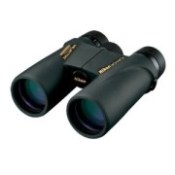
Nikon Monarch M5
Best mid-priced bird watching binoculars. Waterproof, shockproof, multi-coated ED-Glass. |

|
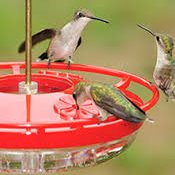
Best Hummingbird Feeder
Drip-Free, Ant-moat, Durable, Easy to Fill and Clean. |
| Click Images or Links To View More Info | ||
Subscribe to Our FREE Newsletter: The Birder Alert!

