
Hummingbird Food Recipe - Make Your Own Nectar!
To make your hummingbird food recipe solution, follow these instructions without deviation from ingredients.

When creating a sugar solution for your feeder, the best ratio is 1 part white, granulated sugar to 4 parts water, since this closely approximates the concentrations found in the nectar of wildflowers they prefer.
To make a little over 1 cup of hummingbird nectar recipe solution (normally enough to fill a standard feeder) follow the below directions:
- Make sure your feeder is cleaned thoroughly before adding new solution.
- Boil 1 cup of water.
- Stir 1/4 cup of white granulated sugar into the 1 cup of heated water.
- Stir until sugar dissolves.
- Cool, fill your hummingbird feeder and serve!
- Any leftover nectar can be stored in the refrigerator for 2 weeks.
Got Hummingbirds?
Who's turn is it to clean and refill the feeders?
About Homemade Hummingbird Nectar
Below we discuss in detail about the natural flower nectar that hummingbirds feed on and how it compares to homemade hummingbird food.
Natural Nectar Composition
Hummingbirds are specialized nectarivores that feed on dilute solutions of sugars with trace amounts of amino acids and electrolytes.
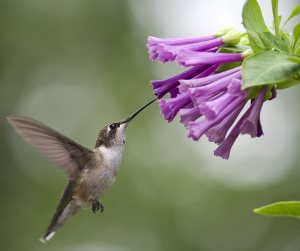
Flower nectar is digested and quickly converted into energy, supplying a hummingbird's carbohydrate requirements.
The sugar in flower nectar is primarily sucrose, like that of white sugar.
Artificial Nectar Concentration
Using the normally accepted hummingbird feeder solution ratio of 1:4 (i.e., 1 cup sugar dissolved in 4 cups water = ~5 cups/~37 oz of nectar) produces a solution with an approximate sugar concentration of 20% (1/5 of the solution is sugar)
This sugar concentration is what is naturally found in flower nectars preferred by hummingbirds.
We say approximate because in reality sugar and water molecules have different atomic weights, which means you can't simply divide to get your percentage by volume alone.
A refractometer* (which McDade and Weeks used to measure sugar content of flower nectar in their study) would measure our 1:4 feeder solution as being 18.6% sugar.
Long story short, you can't go wrong with the 1:4 ratio because the concentration is close to the natural sugar concentration of hummingbird-pollinated flowers (20%).
Higher Concentrations: Can you make hummingbird food too strong?
Are higher concentrations of a hummingbird food recipe harmful?
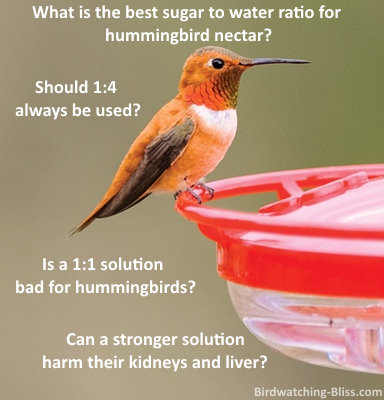
Despite statements that high sugar concentrations can cause liver and kidney damage to hummingbirds, no research has shown that higher concentrations are harmful to hummingbirds.
In fact, Blem et al. (2000) found that Rufous Hummingbirds (Selasphorus rufus) preferred a sugar concentration of 50% when
It also has been stated that hummingbirds will get a fungal infection on their tongue from these higher sugar nectar concentrations.
This is most likely due to the fact that a concentrated sugar solution for your nectar will ferment faster and grow fungus and/or bacteria in your feeders and need to be cleaned more often.
Also, Dr. Reed Hainsworth, Ph. D and Dr. Larry Wolf, Ph. D., who have studied hummingbird physiology for several decades, states:
"A hummingbird is more likely to stay at a feeder when it first arrives if the feeder contains a relatively rich sugar solution."
A 60 calorie solution can be mixed for this purpose with equal volumes of sugar and water (1:1 ratio).
This high concentration is important to replenish energy reserves during migration, and to fuel the territorial exploits of males and nesting activities of females.
Once hummingbirds have been attracted with a rich sugar solution for two or three weeks, a lower concentration will increase their feeding activity and still provide sufficient energy.
To promote high rates of feeding activity, mix one part sugar with four parts water (1:4 ratio). This 10-calorie solution is similar to lower sugar concentrations in nectar produced by some plants.
It will seem like there are many more hummingbirds visiting your feeders because each bird will feed 10 to 12 times an hour in comparison to two or three times an hour with richer food.
If you wish to make the change from high to low sugar concentrations more gradual, the "average" 35-calorie concentration can be mixed with one part sugar and two parts water (1:2 ratio)."
Janet Asked: I messed up and did three water and one sugar, is that going to hurt them?
Answer: No, it will not harm them. The higher concentration of sugar will just give them an extra boost of calories. See above explanation (higher concentrations) in regards to using a 1:1 sugar solution.
Higher nectar concentrations (up to 1:1) can be made, especially during cold migration periods.
But if you are feeding during the warmer months, just go back to the 4:1 ratio on the next batch.
Lower Concentrations of Hummingbird Nectar Recipe
And what about lower concentrations?
The more diluted the nectar, the more consumption of nectar is needed to satisfy a hummingbird's energy requirements.
McWhorter and Martez del Rio (1999) found that, depending on sugar concentration, Broad-tailed Hummingbirds (Selasphorus platycercus) consumed volumes of nectar ranging from 1.6 to 5.4 times their body mass per day.
Weaker concentrations are less attractive to hummers & you'll find they may just stop coming to your feeder to find a better, concentrated source.
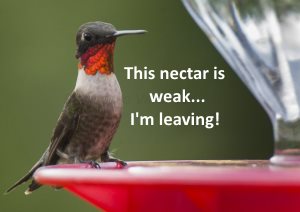
In addition, because hummingbirds will have to consume more of a dilute nectar to get the same energy from a concentrated one, their bodies will have to work harder.
The rate of energy assimilation may be constrained by excess water elimination.
So when making your hummingbird food recipe solution, don't go weaker than the 1:4 ratio of sugar to water.
Honey and Artificial Sweeteners
The sugar in flower nectar is primarily sucrose, like that of white sugar.
So don't use honey in your feeder, which is primarily composed of fructose & glucose. Hummingbirds can't digest it as efficiently.
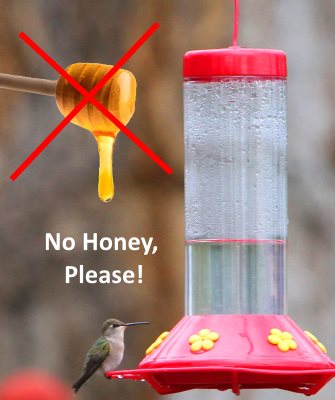
Fermentation & mold growth also occurs faster in honey solutions than those made from granulated sugar. This mold (fungus) can give the hummingbirds a fatal tongue infection.
Do not use artificial sweeteners either which provide no calories (no energy).
Comments/Questions:
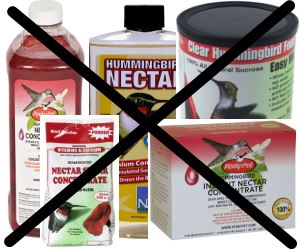
Should I Add Red Artificial Food Dye To My Hummingbird Feeder?
Because this was a common question, we dedicated an entire page to answering this as well as why you should stop buying hummingbird nectar.
Jann Asked: Thank you for your Hummingbird food recipe. I have just bought some new feeders and will be trying it out for the first time tomorrow.
My question: I have seen some commercially available syrup preparations which are red.
Is there any advantage to putting in food coloring to make the syrup red? My feeders are of clear plastic with red bases and little yellow 'flowers' at the access tubes.
Jill Also Asked: I heard the red dye in store bought food causes a problem with their kidneys after so long? Or have the companies changed the dye in the food mixture?
Answer: Just don't go there.
There is no need to make red nectar and although I still to this day have not found SOLID, scientific evidence that red dye is harmful to hummingbirds, it's better and simpler to just leave it out.
It's artificial, not natural, period.
Purchasing hummingbird food is a marketing rip-off.
All you need is regular, white granulated sugar and water to make your own at the 1:4 ratio which is fairly cheap.
Your feeder mostly likely has red parts on it, either the base or top or both. Put it up and they will come.
If you are having trouble initially attracting hummingbirds to your feeder, then you may want to exaggerate the red by adding red ribbons, red flowers, red-anything to lure them in.
If there are hummingbirds cruising around in your neighborhood and your feeder is visible, they will find it and return often without needing red food coloring.
Is it Okay To Use Unrefined, Turbinado Raw Sugar or Brown Sugar for Hummingbird Food?
Susan Asked: Hello, I was looking at your recipe for hummingbird food and have a question.
I have organic raw sugar made from evaporated sugar cane juice. (I'm at work and I don't have the exact specifications.)
It's supposed to work exactly like regular granulated sugar--it does in baking.
Can I use this in a hummingbird feeder or should I go purchase some regular white sugar?
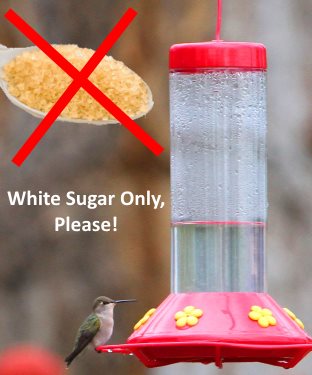
Answer: Unrefined sugar from sugar cane has iron, mineral salts and other minerals that are not present in white granulated sugar (only sucrose) nor in natural flower nectar.
While a better choice for humans, the added minerals in unrefined sugar may have an adverse affect on hummingbirds.
Brown sugar has molasses added to it which also contains iron and other minerals.
Plain, white granulated sugar is best for making your hummingbird solution.
Using Cane Syrup, Corn Syrup (Karo) in Hummingbird Feeders
Ruth Asked: I live in S.E. Missouri & every year we get dozens of hummingbirds in our area. I set out 5 feeders, spaced out around our front & backyard.
Sometimes we get so many, it's like watching a swarm of bees attacking the feeders..lol.
Anyway my question is this...
I read a few of your articles on how to make the nectar, which the recipe I use is the 4:1 ratio of water to sugar.
My son has told me that he read that white corn syrup can be used in place of the sugar & was less costly to make. I'm not so sure. Thoughts please?
Answer: Table sugar (sucrose) is a disaccharide made from two simple sugar (glucose and fructose) molecules, which is a closer match to what hummingbirds find in flowers.
Corn syrup contains dextrose and high fructose or high maltose sugars, but also includes combinations of more complex sugars.
Any portion of the simple sugars found in corn syrup could be absorbed more quickly without waiting for the digestive system to break them down.
I don't know where you intend to buy corn syrup, but be aware that light Karo and Golden Barrel syrups also contains salt and vanilla.
Also studies on hummingbird food preferences show that in high concentrations, they prefer table sugar.
Lyra Asked: Does anyone make a solution for hummingbirds using cane syrup?
We have nephew that thinks we like the stuff and he keeps sending it!
We are currently enjoying the annual migration of hummingbirds.
We don't get many but sometimes we have two or three at a time so I put feeders on both sides of our house to eliminate squabbling.
Answer: The dark cane syrup has high amounts of iron than regular white granulated sugar does not and can possibly be harmful to hummingbirds so we advise against using dark cane syrup, sorghum molasses, etc.
What to do with all the excess syrup you don't want?
Try mixing it with butter (makes the taste milder, good on toast, biscuits, pancakes), use to make caramel corn, or tell your nephew, "Thanks, we have enough cane syrup now to last us a long time, we'll let you know when we need more!" :-)
Using Agave Nectar in Hummingbird Food Recipe
Lauren Asked: Can agave nectar be used instead of sugar in hummingbird feeders? If so, what would be the recipe? Thanks.
Answer: Good question. I wasn't absolutely positive of the answer myself, so I searched around & found this as an answer to using agave:
"Sheri Williamson (author of Peterson Field Guide Hummingbirds of North America) pointed out that Agave Sweetener is not composed of the same sugar as nectar, is less appealing to the hummingbirds, spoils faster and is prone to ferment....
Agave "nectar" (which is made from the plant's sap rather than its flowers) contains no sucrose, the sugar that hummingbirds prefer and the predominant sugar in the nectar of hummingbird-pollinated flowers.
Its predominant sugar is fermentation-friendly fructose (~50-90%), a major component of the nectars of insect-pollinated flowers, and it contains other simple carbohydrates that could contribute to accelerated spoilage."
So I would stick to using simple white sugar (4:1 water to sugar ratio).
It's what hummingbirds require for energy and most closely replicates what they naturally get from flower nectar.
White sugar may be bad for us, but good for them.
Can I Give Hummingbirds Fruit Juice?
Michael Asked: Can you give hummingbirds cranberry juice?
Paul Similarly Asked: I was watching a ruby-throated hummingbird at my nectar feeder, and saw him fly over to a tray feeder I had provided with grape jelly for Baltimore Orioles. He seemed to be eating the thin juice that had pooled in the corner of the feeder.
My question is: Will a hummingbird eat 100% Concord grape juice if I put it in a hummingbird feeder?
Answer: No, do not give hummingbirds fruit juice.
Cranberry juice especially is much too acidic. Juice will attract more ants and bees to your feeders as well.
The primary sugar found in natural flower nectar is sucrose. Fruit juice sugar is fructose which is similar, but not the same.
Keep it simple and only feed hummingbirds the 4:1 water to plain white sugar solution.
Supplementing Hummingbird Food - Nutritional Needs and Vitamins
Peter Asked: Clearly, the high calorie sugar solutions are providing hummers with needed energy. But what about their nutritional needs?
Is there anything nutritive I can add to the sugar solution, to help me over my "fattening up the hummingbirds" guilt? Thanks.
Bliss Said: Excellent question. It's true that hummingbirds cannot live on sugar alone.
Amino acids, of course, are the building blocks of life and cannot be built from only flower nectar even though it does contain small amounts of protein and salts.
Hummingbirds obviously need calcium in their diet for bones and developing egg shells as well as other nutrients.
That is why their diet is supplemented by eating insects.
Natural flower nectar contains very small amounts of protein, and sodium and potassium salts. However, hummingbirds get most of their protein by eating small insects.
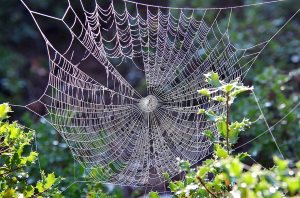
Hummingbirds will steal insects from spider webs and the leftover carcass shells (exuvia) that spiders leave behind once they suck all the "juice" out of them.
They also eat gnats, aphids and other invertebrates.
Now to answer your question about adding to the sugar solution to make it more nutritional...
Well, we don't have an absolute answer because we haven't found a scientifically-based answer that can tell us what would be the right amount of anything to add without being harmful or even toxic to the hummingbirds.
Just like it's possible for humans to overdose on vitamins/minerals it is the same with hummers. But we are still digging for info and will let you know if we find anything.
To play it safe, just stick with the sugar solution and let the hummingbirds naturally supplement their diet.
If you really want to experiment, I guess you could put something out near your feeder that would attract small insects (i.e., food that would attract fruit flies, etc.).
This way they could have their appetizer (sugar solution) and entree (insects) all in one place!
And I wouldn't worry or feel guilty about "fattening up the hummingbirds" unless you start to see a few getting lazy and hanging around the feeder in mini-barcaloungers. :-)
Do I need to boil sugar water for hummingbirds?
Boiling the water helps to dissolve the sugar but also may
Amazing Hummingbird Flight
Hummingbird Feeders, Nectar Recipe, Ant Problems:
Don't Use Red Dye in Hummingbird Nectar
Problems with Ants at Hummingbird Feeders
Hummingbird Gifts:
Attracting Hummingbirds:
Hummingbird Species:
Hummingbird Fun Facts
Hummingbird Sugar Concentration
Dick Said: Yours may be the only site on the Internet that properly explains sugar concentrations when feeding hummingbirds.
It seems to me that the percent sugar in a 1:4 solution is around 16.8%. The 16.8 percent figure is based on the C&H Sugar Company figure of 191.766 grams per 8 ounces :1:4 = 16.8%, 1:3 = 21.27%, 1:2 = 28.8%, 1:1 = 44.7 %. The 1:2 ratio is still less than the sugar concentration in many hummingbird attracting plants.
Answer: Thanks, Dick. We did take some time researching sugar concentrations and why the 1:4 ratio is always suggested.
Yvone Asked: I read once, that homemade hummingbird food, may cause diabetes in the hummingbird. Is this true?
Not sure which is best for our hummingbirds. This is information that is extremely important to people who want to have healthy hummingbirds come to their feeders. Please respond. Thank you.
Answer: If you use the 1:4 ratio of sugar to water, that solution replicates the 20% sugar concentration naturally found in flowers that hummingbirds prefer.
But studies have shown that hummingbirds will get nectar from flowers that have a sugar concentration as high as 70% or more.
The danger is making a sugar solution that is too low, not too high.
A dilute solution will cause hummingbirds to have to consume more nectar to get the same energy from a concentrated one and their bodies will have to work harder. The rate of energy assimilation may be constrained by excess water elimination.
Only scientific, professional peer-reviewed journal articles can provide any substantial "proof" about organisms. I have not found any that have found homemade hummingbird food to cause diabetes in hummingbirds.
Hummingbird Food Turned Yellow
Karen Asked: I made my own hummingbird nectar for the first time today. I followed your recipe and used a clean stainless steel pot. The solution turned out slightly yellow. Can I still use it?
Bliss Said: I don't know how the sugar solution would cause a reaction to turn it yellow so I'm not sure if it is safe or not for the hummingbirds. I always just heat the water in the microwave in a glass measuring cup so I haven't come across this problem before.
I'm guessing you added the sugar to the pot and heated it that way?
Can you try boiling the water by itself in the pot and then add the hot water (being careful, of course!) to the sugar in another container that is heat resistant? Perhaps you won't get the yellowing that way. If the water turns yellow in the pot without adding sugar, then maybe there is a mineral or something in your water that is reacting with the pot. Also, read below...
Rinda Said: I find if I buy cheaper off-brand sugar that my solutions are yellowish. Name-brand sugar produces a clear solution, made the identical way.
Bliss Said: I always use the cheapest brand of white, granulated sugar and occasionally have noticed our solutions being slightly yellowish in color.
Refined sugar is bleached white by adding sulfur dioxide. Phosphoric acid and calcium hydroxide are also added and the syrup is then strained through a carbon filter to remove any remaining color impurities.
I imagine that it is possible for some companies to not have as thorough a process to remove the brown color crystals from the raw sugar. Therefore, when a hummingbird sugar solution is made, it may appear yellowish in color from those sugar crystals that are not completely bleached, but it is perfectly fine for the hummingbirds.
Can I make 3:1 Hummingbird Food?
A 3:1 hummingbird food recipe of 3 parts water to 1 part white sugar can be used especially during migration when a sweeter nectar solution will provide more calories to the hummingbirds at stopovers for fueling up during spring and fall migration.
What can I feed hummingbirds besides sugar water?
Sugar water is the best thing you can feed hummingbirds.
We do not recommend feeding them fruit juice, jam/jelly, honey, etc..
Planting flowers (trumpet vine, salvia, bee balm, and other hummingbird flowers that provide them with natural nectar is another option which will also attract insects that they will eat to supplement their diet.
Do hummingbirds eat mosquitoes?
Yes, hummingbirds do eat mosquitoes and other small insects.
While nectar is the primary food source for hummingbirds, they also supplement their diet with insects, which provide them with protein and other essential nutrients.
Hummingbirds are known to catch and eat small insects such as mosquitoes, gnats, fruit flies, and spiders.
They are especially active in catching insects during the breeding season when they need more protein to support their young.
So, if you have hummingbirds in your garden, they may help control the mosquito population in your area.
Can hummingbirds survive without sugar water/nectar?
Nectar is a part of a hummingbird's diet, but they can survive without it.
In areas where flowers are abundant, hummingbirds can find enough nectar to sustain themselves.
However, in urban areas or during the winter months when flowers are scarce, providing sugar water can be helpful for hummingbirds for those that don't migrate south, like the Anna's Hummingbird along the Pacific Coast.
Sugar water does provide hummingbirds with energy, but they can survive by eating arthopods (i.e., insects and spiders).
One study determined that a hummingbird in Arizona’s Santa Catalina Mountains during May survived on only arthopods for two weeks.
Hummingbirds adapt their foraging to whichever sources are available, and arthropod prey often replaces nectar. - Ornithologist, Helmuth O. Wagner (study)
|
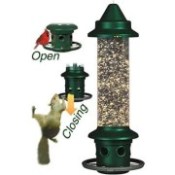
Our Favorite Bird Watching Binoculars, Squirrel-Proof Feeder & Hummingbird Feeder Read Our Reviews: |
||
Nikon Monarch M5
Best mid-priced bird watching binoculars. Waterproof, shockproof, multi-coated ED-Glass. |
|
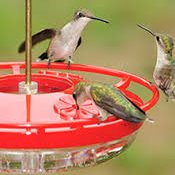
Best Hummingbird Feeder
Drip-Free, Ant-moat, Durable, Easy to Fill and Clean. |
| Click Images or Links To View More Info | ||
Subscribe to Our FREE Newsletter: The Birder Alert!

