
Winter Bird Feeding: The Best High Energy Bird Food to Give Birds During Cold Weather
Winter bird feeding differs from summertime feeding because much of the natural foods birds eat during the warmer months such as insects, berries, and seeds are gone or hidden by snow until spring.
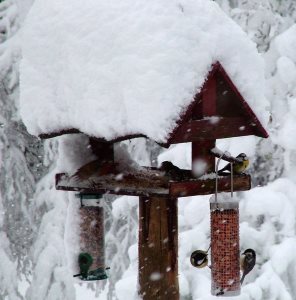
Their diet and feeding habits change during the winter. Their high metabolic rate and the need to maintain body temperatures of over 100 degrees F requires high calorie and high fat foods.
This is where you come in. Just think if you were outside on a cold, wintry day; snow blowing, temperature dropping, stomach growling...then through the falling snow you spot a buffet table!
Some Winter Bird Feeding Tips:
Below are some good winter bird feeding options that will give birds the energy they need to get through yet another cold night.
Suet
Especially in cold weather birds need constant refueling, and suet (raw beef fat) is an ideal food.
It's packed with calories that convert quickly to much-needed warmth and energy.
Here are some simple bird suet recipes that you can make at home.
If you have problems with squirrels stealing the suet, then check these squirrel proof suet feeders.
Types of birds attracted to suet:
Black-capped and other Chickadees, White-breasted & Red-breasted Nuthatches, Tufted Titmice, Downy & Hairy Woodpeckers, Red-bellied Woodpeckers, and Wrens
Black Oil Sunflower Seed
Black oil sunflower seed is a great seed to offer in the winter. It is a #1 favorite among many songbird species.
The high protein in combination with the high fat content from the oil produces an energy-packed morsel.
Black oil sunflower has twice the calories per pound than striped sunflower and its smaller, thinner shells make it easier for smaller birds to open and creates less mess when discarded by the birds.
You can use black oil sunflower seeds in hopper, platform, and tube feeders.
Here is a squirrel-proof bird feeder that can be used with black oil sunflower seeds and will keep the squirrels out!
Or if your rather build your own feeder, here are some free bird feeder plans of different types for a great family project.
Types of birds attracted to black oil sunflower:
Chickadees, Titmice, Nuthatches, House Finches, Purple Finches, Cardinals, Towhees, Goldfinches, Rosy-Finches, Redpolls, Pine Siskins, Woodpeckers, Grosbeaks, Sparrows, and Jays
Offering Birds Peanuts
Peanuts are high in protein, oil, and fat, which makes them a perfect addition to the foods you offer the birds in your backyard, especially during the winter when shorter days require birds to eat as much high-energy food as possible in less time.
You can offer whole peanuts in the shell, but be sure to use unsalted peanuts, not the ones you get from the grocery stores that are usually already salted.
You can also use unsalted shelled peanuts and put them in a peanut bird feeder for clinging birds or in any feeder that will dispense the larger peanut pieces.
Types of birds attracted to Peanuts:
Chickadees, creepers, juncos, grosbeaks, jays, nuthatches, cardinals, titmice, woodpeckers, flickers, and wrens.
Keeping your Bird Feeders Clean
It's important to clean your feeders often to prevent mold build-up and food spoilage.
It also helps to reduce the transfer of diseases between birds. Enjoy feeding and watching your backyard birds, but remember to also take care our feathered family friends.
Here are some precautions you can take to provide a safe and healthy bird-feeding environment:
Precautions against Window Collisions
Providing Water for Birds During the Winter - Heated Bird Baths and De-Icers
Providing water for birds is also very helpful during the winter months when other sources are lacking or frozen.
Just remember to change the water often and if you are having trouble with it freezing, try a bird bath heater to place in your existing bird bath like the heaters listed below:
Or, if you do not already have a bird bath, you can try an all-in-one heated bird bath that can be used year-round, winter and summer.
Here's our favorite heated bird bath.
Even if you live in very cold areas, there are bird baths that will stay warm down to -20 degrees F. and cost only pennies to operate using a internal thermostat that only turns on when the heater is needed.
Winter Roost Box Plans
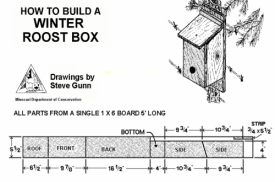
Go to our Winter Bird House Plans for a winter roost box plan to shelter the birds through the long, cold days and nights of the winter season.
A winter roost box is certainly an added survival bonus to feeding them the high-calorie seeds.
Hope your have fun with winter bird feeding and now have some good wild bird food choices.
Related Bird Feeding Pages:
Wild Bird Food - What Do Birds Like Best?
How do birds survive the winter? - Do birds get cold? Do birds hibernate? One species does!
Types of Bird Seed
Bird feeder photo courtesy of Andres Brockhurst
|
Our Favorite Bird Watching Binoculars, Squirrel-Proof Feeder & Hummingbird Feeder Read Our Reviews: |
||
Nikon Monarch M5
Best mid-priced bird watching binoculars. Waterproof, shockproof, multi-coated ED-Glass. |
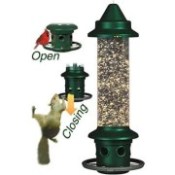
|
Best Hummingbird Feeder
Drip-Free, Ant-moat, Durable, Easy to Fill and Clean. |
| Click Images or Links To View More Info | ||